


Why Choose Road Bike Pedals for Speed?
If you have ever finished a hard ride with hot spots under your feet, vague pedal feel in a sprint, or the sense that your setup is wasting effort, you are already asking why choose road bike pedals over basic flat pedals or less refined systems. The answer is not marketing hype. It is mechanical efficiency, better foot support, more controlled movement, and a cleaner connection between rider and bike.
For serious road cyclists, pedals are not a minor contact point. They are where power enters the drivetrain thousands of times per ride. When that interface is stable, light, and properly fitted, the bike feels sharper under load and calmer over distance. When it is not, small inefficiencies become fatigue, discomfort, and lost confidence.
Why choose road bike pedals in the first place?
Road bike pedals are built for a very specific job. They prioritize efficient power transfer, secure foot retention, low weight, and a pedaling platform designed for sustained seated and standing efforts. That focus matters because road riding places different demands on equipment than commuting, casual riding, or off-road use.
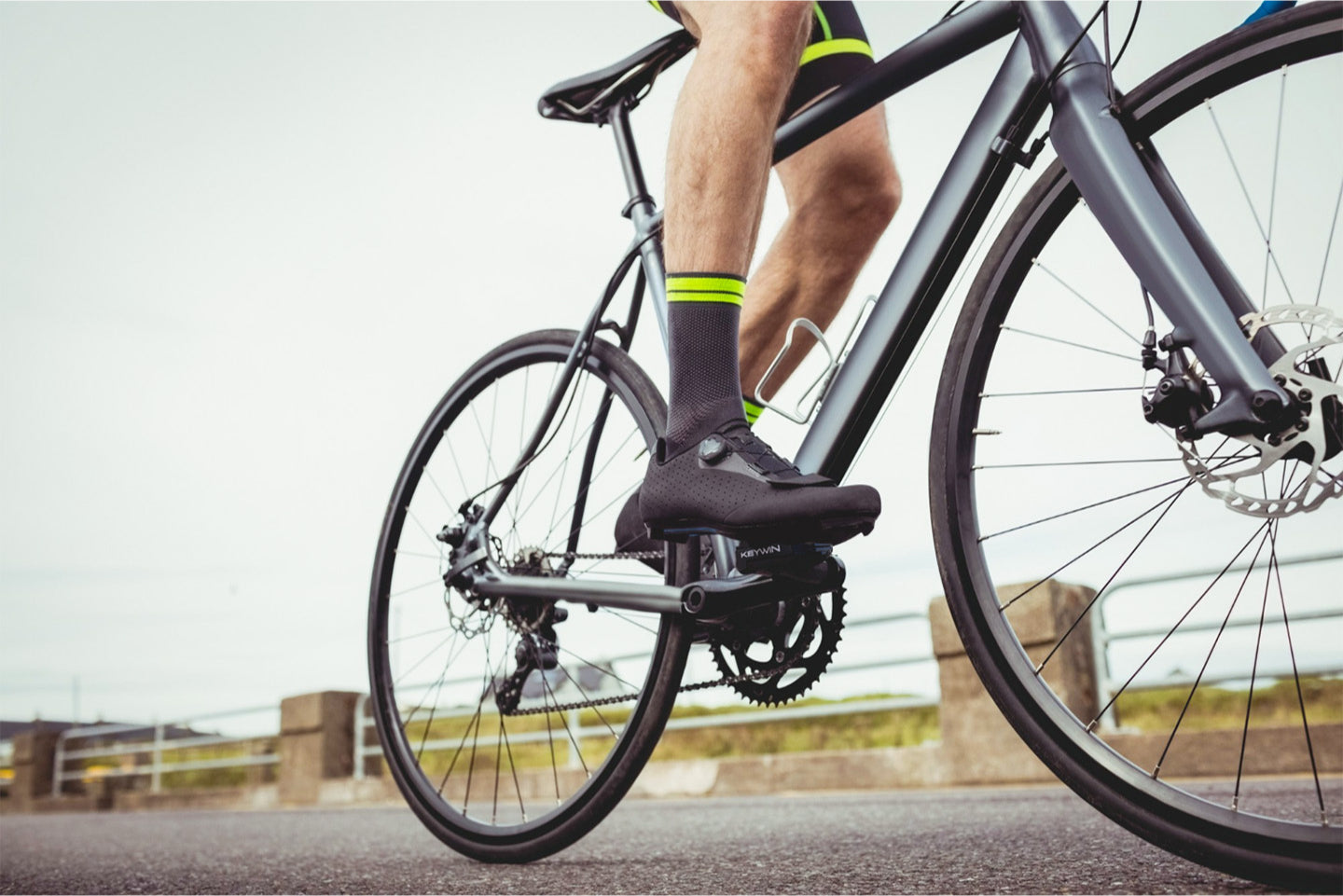
A road pedal system locks the cleat and pedal together so your foot stays in a repeatable position. That repeatability helps with alignment and consistency. On a long climb or during repeated tempo efforts, your foot is not drifting around the pedal body. Your knee track stays more predictable, and your effort goes where it should.
Just as important, road pedals usually offer a broader, more stable interface than small recreational pedals. A larger effective platform supports the foot more evenly, which can reduce pressure points and improve the feeling of control when you are pushing hard. Riders often describe the difference in simple terms: the bike feels more direct.
Power transfer is not just about being clipped in
A lot of cyclists assume the main advantage of road pedals is being attached to the bike. That is only part of the story. The bigger performance gain comes from how the pedal supports the foot during the downstroke and how little energy gets lost through unwanted movement.
A well-engineered road pedal combines a secure retention mechanism, a stable body, and low stack height. Low stack height matters because it reduces the distance between the sole of your shoe and the pedal axle. That tighter connection can improve pedaling feel and reduce the sense of standing above the bike rather than on it. It is a subtle change, but experienced riders notice it.
Platform stability matters just as much. If the pedal body is too narrow, too flexible, or vague under load, the shoe can feel unsupported, especially in sprints or high-torque climbing. A stable platform spreads force more evenly across the forefoot. That tends to feel better and perform better.
This is one reason premium road pedal systems command attention from performance riders. They are not chasing complexity for its own sake. They are reducing unwanted movement at one of the most critical contact points on the bike.
The comfort advantage is bigger than many riders expect
Comfort and performance are often treated like opposites in cycling. In reality, the best equipment usually improves both. Road pedals are a good example.
When your foot sits on a stable platform with the right cleat position and the right amount of float, your lower body can move more naturally through the pedal stroke. That can reduce stress on the knees, calm down ankle compensation, and limit pressure buildup under the foot. Over a one-hour ride, that may seem minor. Over four hours, it becomes decisive.
Float is especially important here. Some riders need more rotational freedom to accommodate their natural movement pattern, while others prefer a more locked-in feel. Neither choice is universally right. It depends on your anatomy, pedaling style, injury history, and fit. The best road pedal systems account for that by offering adjustability rather than forcing every rider into the same feel.
That is where performance-focused design separates itself from mass-market solutions. Riders who care about fit know that a few millimeters of stack, a more supportive platform, or a better float range can completely change how a bike feels over distance.
Why choose road bike pedals instead of mountain or hybrid systems?
There are situations where a two-sided off-road pedal makes sense on a road bike. If you stop frequently, walk often, or mix in gravel and commuting, that setup can be practical. It is easier to clip into at low speed, and the shoes are usually easier to walk in.
But if your priority is pure road performance, dedicated road pedals still set the standard. They are typically lighter for the intended use, offer a larger contact area, and create a more stable interface under sustained power. That becomes especially noticeable in long road rides, race efforts, and fast group riding where efficiency and composure matter.
The trade-off is straightforward. Road systems are less convenient off the bike, and they can feel more specific to set up. In return, they deliver a more refined on-bike experience. For riders training with intent, that is usually the right exchange.
Fit, float, and stack height decide whether pedals help or hurt
Pedals only improve performance when they work with your body. This is where many riders make the wrong call. They buy based on price or popularity and overlook the fit variables that determine comfort and efficiency.
Cleat placement is the first piece. A repeatable cleat-pedal interface allows you to position the foot precisely relative to the axle. That precision supports consistent biomechanics. If you have dealt with numb toes, knee irritation, or unstable pedaling, the pedal system may be part of the problem rather than the solution.
Then there is float. Too little float can feel sharp and responsive for some riders, but restrictive for others. Too much float can relieve joint stress, but it may also feel vague if the platform itself is not stable. The right setup is the one that supports natural movement without sacrificing control.
Stack height is often overlooked because it sounds like a small technical detail. It is not. Lower stack height can improve stability and pedal feel, and it may also affect saddle height and overall fit. Riders chasing marginal gains often spend heavily on wheels or drivetrains while ignoring one of the most immediate improvements in rider-bike connection.
Weight matters, but not in the way people think
Yes, lighter pedals are desirable on a road bike. Rotating weight and total bike weight both matter, especially to riders who climb often or care about acceleration. But weight alone is not the reason to choose road bike pedals.
A featherweight pedal that sacrifices support, durability, or bearing quality is not a performance upgrade. The right road pedal balances low mass with stiffness, reliable engagement, and long-term durability. Materials matter here. Carbon pedal bodies, titanium or cromoly axles, and quality internals all contribute, but only if the system is engineered as a whole.
Experienced riders know that a component should disappear beneath them. You should not be thinking about whether the pedal is flexing, creaking, or wearing unevenly. You should be thinking about holding the wheel in front of you or finishing the climb strong.
Craftsmanship still matters in a category full of lookalikes
Pedals can look similar at a glance, but they do not ride the same. Tolerances, retention feel, body shape, bearing quality, and assembly standards all show up on the road. This is one reason specialist brands still matter. A pedal built around performance first, rather than volume production, tends to show its value over time.
That is especially true for riders who train regularly and expect their equipment to last. Durability is not glamorous, but it is part of performance. A pedal that maintains smooth engagement, stable support, and dependable cleat interface through season after season is doing real work for the rider.
Keywin built its reputation on that idea long before road pedals became a crowded category. The principle still holds. When a company understands the mechanics deeply and builds for riders who can feel the difference, the product usually reflects it.
So, who should choose road bike pedals?
If you ride for fitness a couple times a month at an easy pace, flats may be enough. If you race, train seriously, join fast club rides, or care about fit and long-ride comfort, road pedals make far more sense. They offer a more efficient, more stable, and more adjustable connection to the bike.
They also reward attention to detail. The riders who benefit most are usually the ones who notice small changes in foot stability, knee alignment, and pedaling smoothness. If that sounds like you, this is not a marginal upgrade. It is part of building a bike that responds exactly as it should.
The best pedal is the one that supports your biomechanics, transfers power without drama, and stays consistent ride after ride. Once you feel that difference under load, the question is no longer why choose road bike pedals. It is why you waited so long.


