

7 Benefits of Clipless Road Pedals
A strong pedal stroke is easy to talk about and harder to feel. The real benefits of clipless road pedals show up when the bike responds instantly under load, your foot stays planted through rough pavement, and long rides stop feeling like a constant negotiation with position and pressure.
For serious road cyclists, pedals are not a minor component. They are one of the few contact points that directly shape power transfer, stability, comfort, and confidence. If your current setup feels vague, inefficient, or fatiguing, clipless road pedals can change the ride in a way you notice from the first hard acceleration.
Why the benefits of clipless road pedals matter
A road pedal has one job that influences almost everything else - create a secure, efficient connection between rider and bike. Flat pedals can work for casual riding, commuting, or skills practice, but when the goal is speed, consistency, and repeatable positioning, they leave too much to chance.
Clipless systems set the standard because they hold the foot in a defined relationship to the pedal. That changes how force moves through the bike. It also changes how stable the rider feels in and out of the saddle, how predictable the bike handles at high cadence, and how sustainable a hard effort feels after several hours.
The term "clipless" confuses some riders because you do clip into them. The name comes from replacing old toe clips and straps with a cleat-and-retention system. What matters on the road is not the label. It is the mechanical advantage.
1. More direct power transfer
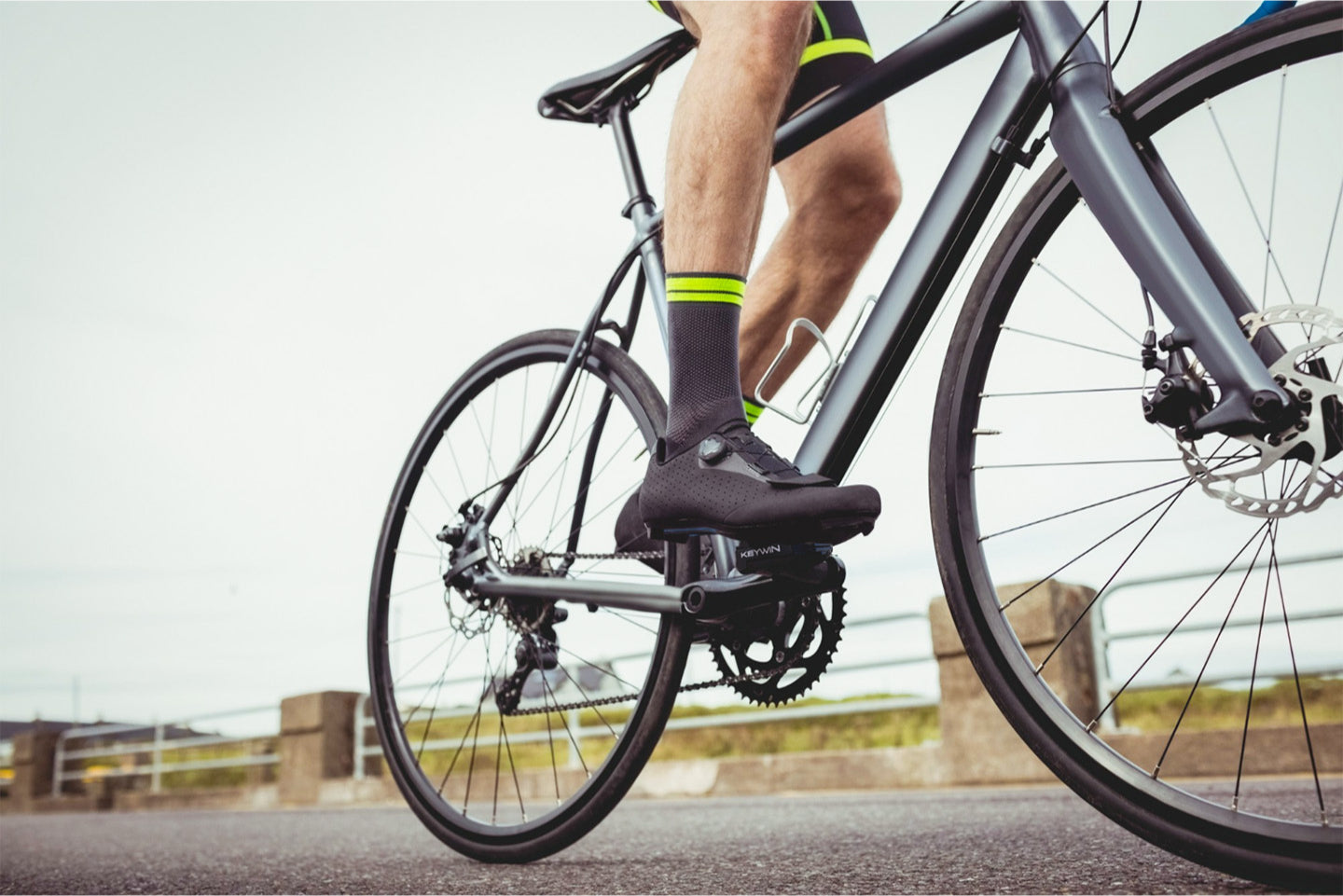
The biggest reason riders move to clipless pedals is simple - less wasted movement between foot and pedal. When the shoe locks into the cleat interface, your effort goes into the drivetrain with less loss from foot shift, sole flex, or unstable contact.
That matters most when torque rises. Think steep grades, sprint efforts, attacking out of a corner, or driving a bigger gear into a headwind. A secure interface lets you commit power earlier and hold it longer without your foot searching for support.
This is where pedal design separates average systems from high-performance ones. Platform stability, low stack height, and a precise cleat engagement all influence how immediate the bike feels beneath you. A larger, more supportive contact area can make the pedal stroke feel calmer and more connected, especially for stronger riders who load the pedal heavily.
2. Better stability at cadence
At endurance pace, a less secure pedal can feel acceptable. At higher cadence, flaws become obvious fast. If the foot is free to drift even slightly, the pedal stroke starts to feel noisy. Ankles move around. Knees track less consistently. The bike can feel less composed than it should.
Clipless road pedals solve that by fixing the shoe to the pedal in a repeatable position. That stable platform helps the rider stay smooth through fast spinning efforts, technical descents, and standing transitions. You are not just attached to the bike. You are supported by it.
For club riders and racers, this can be the difference between feeling on top of the gear and feeling like you are managing it. Stability is performance. It keeps movement controlled when the speed rises.
3. A more efficient and repeatable bike fit
One of the most overlooked benefits of clipless road pedals is consistency. Every time you clip in, your foot returns to the same position relative to the spindle. That repeatability gives bike fit a stable foundation.
With flats, foot placement can vary from one stop sign to the next. Even small changes in stance width or fore-aft placement can alter knee tracking and pressure distribution. Over a short ride, that may not matter. Over three hours, it often does.
Clipless pedals make fit adjustments meaningful because the position is repeatable. Cleat setup, float, stack height, and spindle placement all become tools for refining comfort and efficiency. Riders dealing with hot spots, knee irritation, or uneven loading often find that the right pedal system does more than improve speed - it helps the whole bike feel properly dialed.
It is worth noting that locked-in does not mean fixed rigidly in place. Quality road pedals use float to let the foot move within a controlled range. That balance matters. Too little freedom can feel harsh on sensitive joints. Too much can feel vague. The right amount supports natural movement without sacrificing precision.
4. Improved comfort on long rides
Comfort and performance are not separate conversations. If a pedal creates pressure points or instability, the rider compensates somewhere else. That often shows up as numbness, calf tension, knee irritation, or general fatigue that seems out of proportion to the effort.
A well-designed clipless road pedal improves comfort by spreading load more effectively and reducing micro-movements that irritate the foot over time. Lower stack height can also help the rider feel more connected to the bike while subtly influencing pedaling mechanics and cornering clearance.
This is especially relevant for masters riders and anyone logging serious weekly volume. Small inefficiencies are manageable for 45 minutes. They become expensive after four hours. A stable pedal platform with the right float and cleat setup can make long rides feel less punishing and more sustainable.
5. More control when the road gets rough
Road cycling is not done in a lab. Pavement breaks up. Corners tighten unexpectedly. Climbs force you out of the saddle. Descents demand confidence. In all of those moments, pedal security matters.
Clipless pedals keep the foot connected when the bike moves sharply beneath you. That improves control over rough surfaces and reduces the chance of slipping off the pedal during a hard effort. It also helps the rider stay balanced while shifting weight through technical sections.
This does not mean clipless pedals make every rider instantly safer. They do require practice, especially clipping out at low speed. New users need a short adaptation period, and tension settings should not be excessively tight at the start. But once engagement and release become automatic, the control advantage is difficult to give up.
6. Stronger out-of-saddle riding
Standing efforts expose pedal weaknesses quickly. If the platform feels unstable or the engagement vague, the bike can feel disconnected side to side. The rider ends up wasting energy just trying to stay centered over the pedals.
A solid clipless system changes that. During sprints and climbs, it gives you a firm base to drive against as the bike rocks underneath you. The result is a more confident rhythm and a stronger sense that every surge is translated into forward motion.
This is one reason performance riders tend to be particular about pedal feel. Weight matters, but not in isolation. Low weight paired with rigidity, support, and secure retention is where the real gain appears. Nothing comes close to a pedal that feels planted under full load.
7. Long-term durability and lower maintenance surprises
The best pedals are not only fast on day one. They stay precise after seasons of riding. That matters because wear in the axle, body, bearings, or cleat interface changes feel gradually, and riders often normalize that decline until they step on a better system.
Premium clipless road pedals are built to resist that fade. High-quality axle materials, accurate tolerances, dependable retention, and serviceable construction all contribute to long-term performance. For riders who train seriously, reliability is not a luxury. It is part of the value equation.
A hand-built system with proven design heritage can offer a different level of confidence than a mass-market product built around volume first. That is part of why brands like Keywin have maintained a loyal following among riders who care about measurable pedal performance, not just logos.
Choosing the right clipless road pedal
Not every rider needs the exact same setup. A lighter rider focused on endurance comfort may prioritize float and pressure distribution. A stronger racer may care more about platform support, low stack height, and maximum stability under sprint loads. Axle material, body construction, cleat interface, and adjustability all influence the ride.
It is also fair to say clipless pedals are not ideal for every scenario. If you are mostly riding casually in regular shoes, stopping constantly in city traffic, or still building basic bike-handling confidence, flats may be the better tool for now. But for road cyclists chasing efficiency, consistency, and a cleaner connection to the bike, clipless remains the benchmark.
The real test is not whether a pedal looks fast. It is whether it lets you hold your position, trust your footing, and put power down without second-guessing the contact point. When a pedal does that well, the rest of the bike starts to feel better too.
If you are investing in training, fit, and quality equipment, the pedal system should match that standard. It is one of the smallest components on the bike, but it has an outsized effect on how every mile feels.


