


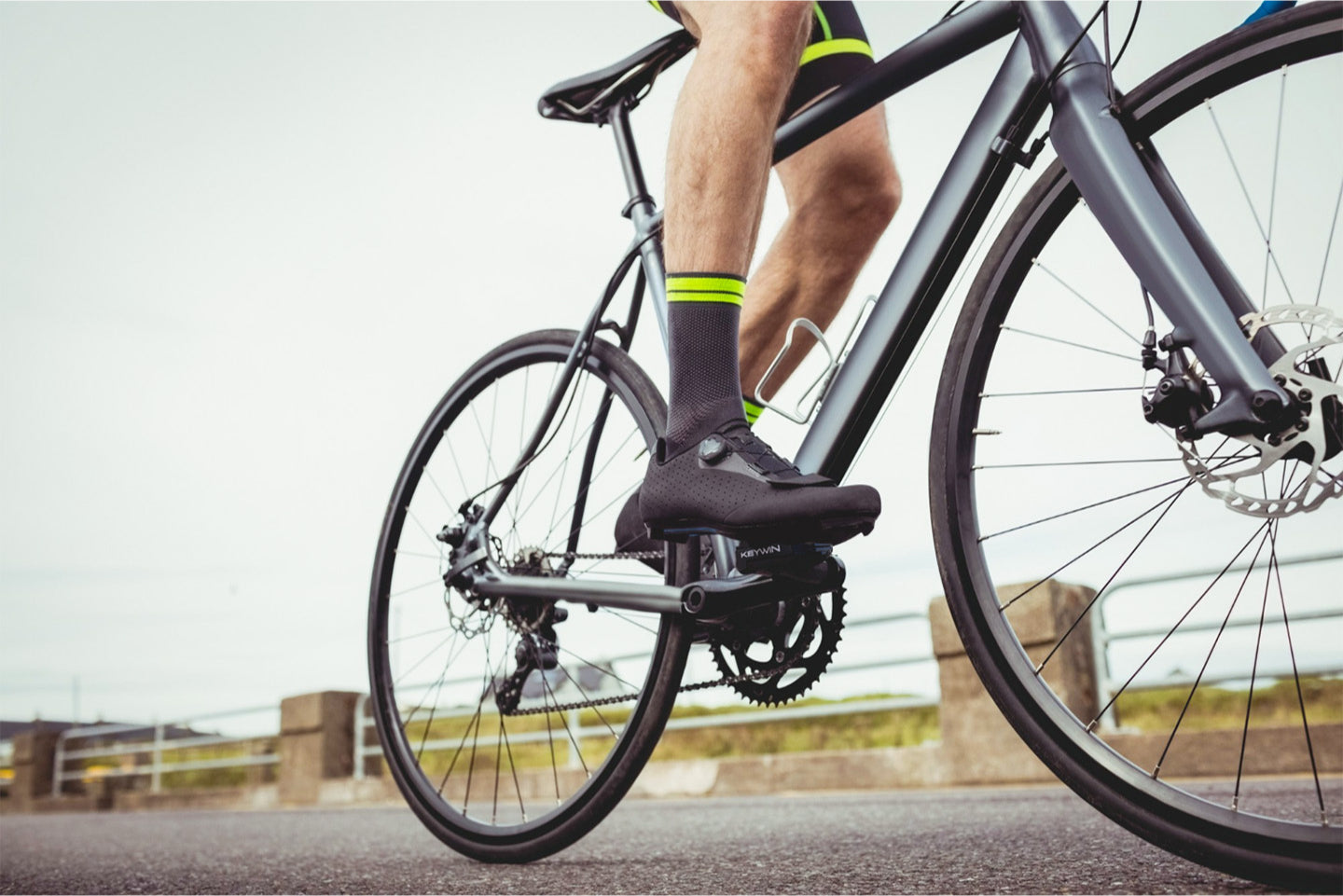

Titanium Axle Road Pedals Worth It?
A 30-gram weight saving sounds small until you remember where it sits. Pedals are one of the few contact points where weight, stiffness, stack height, and interface quality all meet under load, every single pedal stroke. That is why titanium axle road pedals keep showing up in serious bike builds - not as a fashion upgrade, but as a performance choice riders can actually feel.
What titanium axle road pedals really change
The obvious selling point is weight. Titanium has a high strength-to-weight ratio, which lets pedal designers reduce axle weight without giving up the structural integrity road riders expect from a premium clipless system. For racers, climbers, and riders obsessed with a clean build, that matters.
But weight alone is not the whole story. A well-executed titanium axle pedal can also sharpen the ride because the pedal system is being optimized as a complete unit. The best examples combine a light axle with a stable platform, low stack height, secure engagement, and predictable release. When those elements line up, the pedal disappears beneath you, and power transfer feels immediate rather than vague.
That distinction matters because not all lightweight pedals ride the same. Some chase grams and give away support. Others save weight but still feel planted under hard efforts, seated tempo, and out-of-saddle accelerations. Serious riders know the difference fast.
Where the performance gain actually comes from
When cyclists talk about better pedals, they often talk about stiffness. What they usually mean is stability at the shoe-pedal interface. If your foot feels supported across the platform and the cleat engages consistently, the pedal feels more direct. That is not just a lab claim - it changes how confident you feel when driving through threshold efforts or holding form late in a long ride.
Titanium axle road pedals can contribute to that experience because they are often part of higher-end pedal systems built with more attention to interface geometry and stack. A lower stack height can marginally improve pedaling efficiency by reducing the distance between the sole and the spindle center. It also helps some riders feel more connected to the bike, especially when fit is already dialed.
There is also the issue of pedal mass in motion. Pedals are not deep-section wheels, so nobody should exaggerate the aerodynamic or rotational effect here. Still, reducing weight at the pedal is one of those cumulative refinements that appeals to riders who care about every detail. If the platform remains stable and the bearings remain smooth, it is a meaningful upgrade rather than a cosmetic one.
Titanium versus cromoly is not just a weight question
This is where a lot of buying decisions get oversimplified. Titanium usually wins on weight. Cromoly usually wins on cost efficiency and can be the more practical choice for riders who prioritize value and durability over every last gram.
That does not make titanium fragile by default, and it does not make cromoly outdated. It means the right axle material depends on how you ride, how much you weigh, how often you sprint, and how hard you are on equipment. A disciplined road rider logging long miles with a premium bike may see titanium as the obvious fit. A powerful rider who trains year-round in mixed conditions may prefer cromoly if they want maximum toughness with fewer concerns about price.
Pedal design matters more than axle material in isolation. A titanium axle inside a mediocre pedal will not outperform a better-engineered cromoly model with superior platform support, cleaner entry and release, and lower stack. The axle is part of the package, not the whole package.
Who should consider titanium axle road pedals
If you race, chase climbing efficiency, or invest carefully in every touchpoint on the bike, titanium makes sense. Riders in this group tend to notice subtle differences in cleat feel, engagement quality, and pedal-body support. They are not buying on marketing alone. They want a component that earns its place through measurable refinement.
Masters riders and experienced enthusiasts are also prime candidates. That may sound counterintuitive if you associate titanium with pure race gear, but many seasoned riders care less about trends and more about equipment that feels precise and efficient over three to five hours. If a lighter premium pedal also offers excellent float options, a secure platform, and long-term reliability, it checks more than one box.
For newer cyclists or budget-conscious riders, titanium may be harder to justify. If your fit is still evolving, your cleat setup is inconsistent, or your current limitation is shoe support rather than pedal quality, your money may go further elsewhere first. Better shoes, a proper cleat setup, or a more stable pedal body can make a bigger difference than axle material alone.
Fit, float, and platform matter more than the spec sheet
A pedal can be brilliantly light and still wrong for you. The fastest way to waste money on titanium axle road pedals is to ignore the interface between your body and the bike.
Float is a perfect example. Some riders need more angular freedom to protect their knees and track naturally through the stroke. Others want a more locked-in connection. Adjustable float can be a major advantage because it lets the pedal support performance without forcing your body into a fixed position it does not like.
Platform shape matters too. A stable platform spreads pressure more evenly under the forefoot and can reduce that vague, hot-spot-prone feeling riders sometimes accept as normal. On long rides, that becomes less about comfort in the casual sense and more about preserving consistent output.
Then there is stack height. Riders who are detail-oriented about fit understand that small dimensional changes at the pedal can influence saddle height and overall pedaling feel. Lower stack can be an advantage, but only if the rest of the setup is adjusted accordingly. Premium pedal systems that include fit accessories or stack options stand apart because they treat performance as a system, not a single number.
The trade-offs riders should be honest about
Titanium costs more. That is the first trade-off, and there is no reason to pretend otherwise. If you are shopping at the top end, you should expect to pay for material quality, machining precision, and the engineering needed to keep the pedal light without compromising support.
The second trade-off is use case. If your bike sees frequent travel, rough handling, or heavy all-weather mileage, your priorities may shift toward outright resilience and lower replacement cost. Plenty of riders still choose titanium in those conditions, but the value equation changes.
The third trade-off is expectation. Titanium axle road pedals are not a miracle upgrade. They will not fix a poor cleat position, an unstable shoe, or a pedal body that does not support your foot well. They are best seen as the finishing move in a well-sorted road setup.
What to look for before you buy
Start with the pedal system, not the axle badge. Look for a broad, stable platform, low stack height, secure entry and release, and float characteristics that match your biomechanics. Then consider serviceability and long-term bearing smoothness, because premium pedals should stay premium after real mileage.
It is also worth paying attention to craftsmanship. Hand-assembled pedals from a specialist brand often reflect a different design philosophy than mass-market options. The point is not exclusivity for its own sake. The point is tighter control over tolerances, consistency, and the ride feel that serious cyclists notice immediately. That is where brands with genuine clipless heritage still set the standard.
Finally, think in terms of your complete riding experience. The best pedal is not the one with the most impressive isolated spec. It is the one that lets you put down power cleanly, stay comfortable over distance, and trust every engagement when the pace lifts.
At the high end of road equipment, details decide whether a component merely looks fast or truly redefines performance. If you are the kind of rider who notices platform feel, values low stack, and wants every watt to meet a stable interface, titanium is not excess - it is precision. Choose the pedal that fits your body and your riding, and the grams you save will be the least interesting part of the upgrade.


