

How to Improve Pedaling Efficiency
A lot of riders chase bigger gains with harder intervals, lighter wheels, or another round of marginal upgrades, then leave watts on the table every time they clip in. If you want to know how to improve pedaling efficiency, start where power actually meets the bike: your position, your pedal stroke, and the stability of the pedal-cleat interface.
Pedaling efficiency is not just about producing more force. It is about directing force cleanly, repeatedly, and with as little wasted motion as possible. The strongest rider in the group can still lose speed if their hips rock, their cleats are off, or their pedals feel vague under load. The rider who feels planted, aligned, and mechanically clean often gets more from the same engine.
What pedaling efficiency really means
In practical terms, pedaling efficiency is how effectively you convert muscular effort into forward motion. That sounds simple, but several variables shape it at once: saddle height, fore-aft balance, cleat position, float, ankle movement, cadence, and platform stability. Get one badly wrong and the others start compensating.
This is where serious riders sometimes overcomplicate things. You do not need a perfect circular stroke in the abstract. You need a repeatable stroke that keeps pressure on the pedals through the strongest part of the revolution, reduces dead spots, and avoids energy leaks from side-to-side movement or poor alignment.
There is also a trade-off. The most efficient setup on a short race effort is not always the most sustainable one over four hours. Real efficiency includes comfort, because discomfort changes movement patterns. Once a rider starts protecting a hot spot, a knee niggle, or a cramped hip, efficiency drops fast.
How to improve pedaling efficiency with bike fit
The biggest gains usually come from fit, not technique cues.
Saddle height is the first checkpoint. Too high, and you will often see toe pointing at the bottom of the stroke, hips rocking, and inconsistent pressure through the pedal. Too low, and you close the knee angle too much, limiting extension and making the stroke feel heavy. Neither mistake helps smooth power transfer.
Saddle fore-aft matters just as much. A saddle that is too far back can make it harder to stay centered over the crank, often forcing extra reach through the bottom of the stroke. Too far forward can overload the quads and reduce balance over longer rides. There is no universal number here because crank length, femur length, flexibility, and riding style all matter. But if the bike consistently feels like it pushes you behind or in front of the pedal stroke, efficiency suffers.
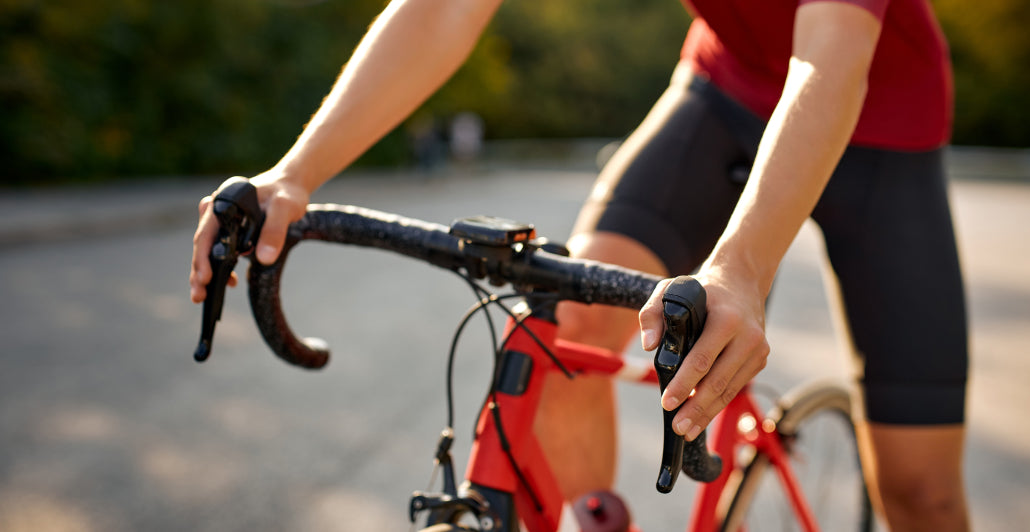
Handlebar reach and drop also play a role. Riders tend to think of pedaling as a lower-body action, but upper-body tension affects it. If you are overreaching, bracing too hard through the shoulders, or sliding around the saddle to hold position, your lower body loses precision.
A good fit does not just look tidy on video. It lets you sit still and drive power without searching for the pedal.
Cleat position can sharpen or waste every pedal stroke
Cleat setup is one of the fastest ways to improve feel under load.
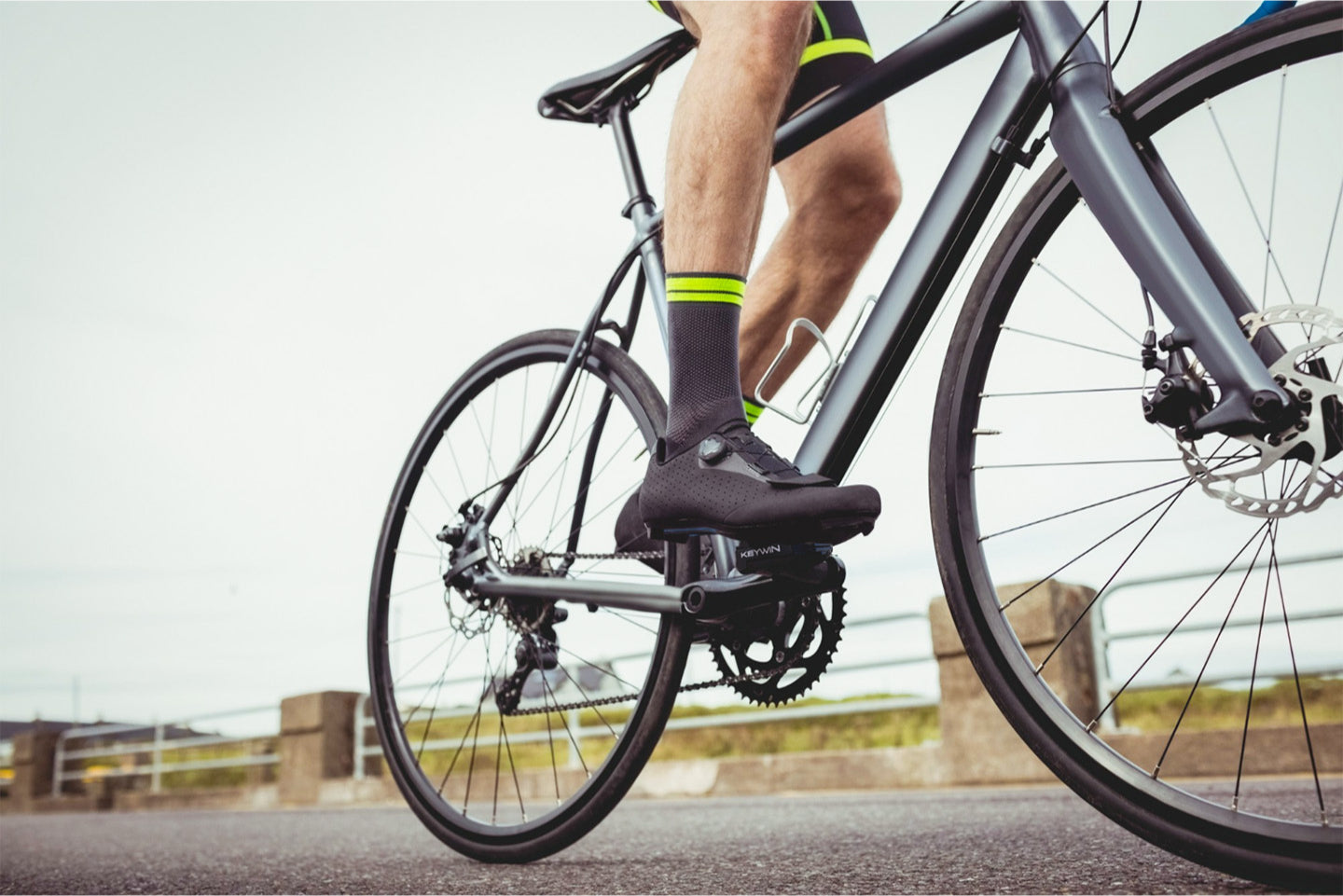
Start with fore-aft position. A more rearward cleat position often improves stability and reduces calf strain, especially for endurance riders and bigger-gear efforts. A more forward position can feel more reactive for some riders, but it may also increase pressure on the forefoot and demand more from the lower leg. The right answer depends on your anatomy, history, and event demands, but random cleat placement is never a good strategy.
Rotational alignment matters even more if you have recurring knee discomfort. If the cleat angle forces your foot into a path it does not want to follow, every revolution becomes a negotiation. That creates friction in the system - not just mechanical friction, but neuromuscular inefficiency. You are spending effort stabilizing against your own setup.
Stance width is another often-missed factor. If your feet are too close or too wide relative to your natural tracking, the knees may drift or the hips may compensate. A properly matched stance can make the entire pedal stroke feel quieter.
Float deserves nuance. Too little float can feel direct, but it may punish riders whose knees do not track perfectly straight. Too much float can reduce that planted sensation some riders want when they are really loading the pedals. Adjustable float is valuable because efficiency improves when the foot is both secure and free enough to move naturally.
Pedal stability is not marketing copy
A stable pedal platform changes how force gets delivered. When the contact feels vague, small corrective movements creep in at the foot, ankle, and knee. They may be subtle, but over thousands of pedal strokes they add up to fatigue and lost consistency.
This is why platform support, low stack height, and a secure cleat interface matter so much for performance riders. A broader, more stable platform helps distribute load and gives the foot a more solid base during high-torque efforts. Lower stack height reduces the distance between foot and spindle, which can improve connection and control. Neither feature replaces fitness, but both can help a trained rider use fitness more effectively.
That is also why premium pedal systems exist in the first place. The goal is not novelty. It is power transfer you can feel, stability you can trust, and long-term consistency under real training and racing loads. Keywin built its reputation on exactly that principle.
Technique changes that actually help
Once fit and setup are dialed, technique matters more.
The first cue is simple: push across, not just down. Most useful power still happens in the downstroke, especially from roughly 1 to 5 o'clock, but efficient riders carry pressure smoothly into and out of that zone instead of stomping one segment and going passive everywhere else.
Second, keep the upper body quiet. If your shoulders rock and your hands grip the bars like a sprint finish during tempo riding, energy is bleeding upward. A calm torso gives the legs a stable platform to work from.
Third, let the ankle move naturally without exaggeration. Some riders overthink ankling and try to manufacture efficiency with dramatic heel drops or toe points. That usually creates inconsistency. The ankle should respond to force and cadence, not perform a choreographed motion.
Finally, match cadence to terrain and physiology. There is no magic number that fits everyone. Higher cadence can reduce muscular strain and help some riders stay smooth, but if it gets too high, they bounce or lose control. Lower cadence can feel powerful on climbs, but grinding too far below your sustainable range often increases fatigue and degrades form. Efficient cadence is the one that lets you stay connected to the pedal stroke without muscling every revolution.
Strength and mobility support better pedaling
If the body cannot hold position, efficiency fades no matter how good the equipment is.
Hip stability is a major limiter. Weak glutes or poor pelvic control can show up as knee drift, saddle movement, or uneven pressure between sides. Core strength matters for the same reason. The goal is not gym-room aesthetics. It is the ability to anchor the pelvis so the legs can drive cleanly.
Mobility also has to be specific. Tight hip flexors, restricted ankle motion, or limited hamstring length can alter how you reach the bottom and top of the stroke. But more mobility is not always better. You need enough range to ride well, plus enough control to use it.
For many experienced cyclists, the best off-bike work is basic and consistent: single-leg stability work, posterior-chain strength, calf capacity, and controlled trunk training. Nothing flashy. Just the kind of support that keeps the stroke stable when fatigue arrives.
How to tell if your pedaling efficiency is improving
Do not rely on one sensation alone. Better efficiency usually shows up as a cluster of signs.
You may notice that tempo power feels easier to hold. Long rides leave less foot fatigue or fewer hot spots. Cadence becomes more natural, especially on false flats and seated climbs. Indoor training may show a more even left-right balance, though those metrics are not perfect and should be read with caution.
The clearest sign is usually this: the bike feels calmer under pressure. You are not hunting for position, correcting your knees, or shifting your feet to find support. You clip in, load the pedal, and everything tracks.
The mistakes that cost strong riders free speed
The most common mistake is trying to solve an equipment problem with technique, or a fit problem with more training. If your foot is unstable, your cleat angle is wrong, or your saddle is compromising hip function, no amount of cueing will fully clean up the stroke.
Another mistake is changing too many variables at once. Move the saddle, swap pedals, lower the bars, and alter cleat position in the same week, and you will have no idea what helped or what caused the new ache. Strong riders are often impatient here. The better approach is controlled changes with enough riding time to judge the result.
The last mistake is assuming comfort and efficiency are opposites. On a road bike, they are closely linked. The rider who is stable, supported, and aligned can keep producing quality power long after the aggressive-looking setup starts to unravel.
If you want better pedaling, think less about forcing a prettier circle and more about building a cleaner system - fit, cleat alignment, platform stability, and repeatable movement all working together. When those pieces are right, efficiency stops being a cue and starts being the way the bike responds every time you turn the crank.


