


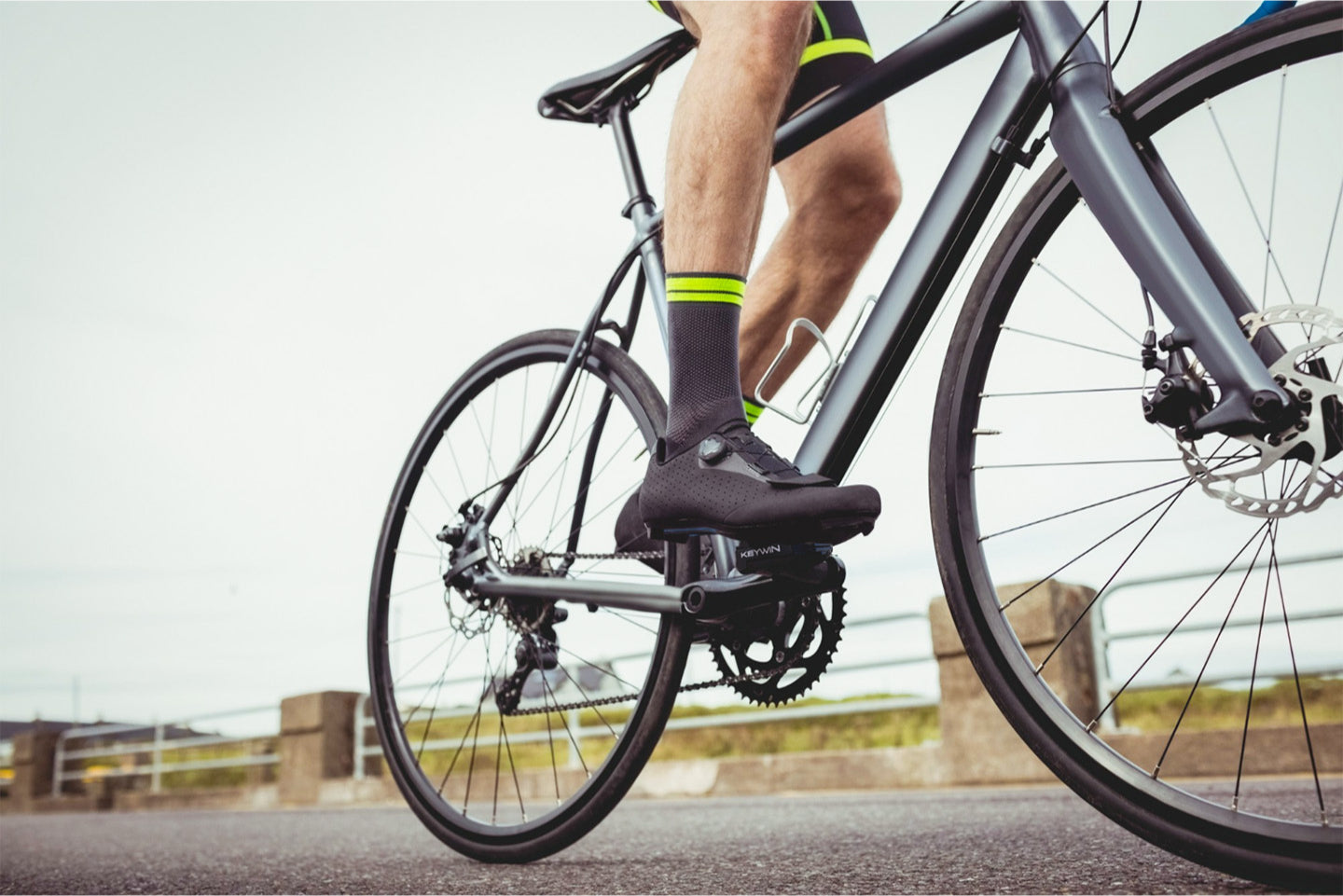

Low Stack Height Road Pedals Explained
The difference between a pedal that feels connected and one that feels slightly vague often comes down to a few millimeters. That is exactly why low stack height road pedals matter. When your foot sits closer to the pedal axle, the bike responds with a more direct feel under load, especially during hard efforts, long seated climbs, and high-cadence riding where stability is everything.
For riders who already pay attention to saddle setback, bar drop, and cleat position, stack height is not a minor detail. It is part of the fit equation. It also influences how efficiently force moves through the shoe, cleat, pedal, and crank without that disconnected sensation that can show up when the platform sits too far below the foot.
What low stack height road pedals actually mean
Stack height is the distance between the center of the pedal axle and the sole of the shoe where power is applied. Lowering that distance brings the rider's foot closer to the spindle. On paper, it sounds simple. On the road, it changes how the bike feels underneath you.
A lower stack height reduces the lever arm between your foot and the axle. That can create a more planted sensation through the bottom of the pedal stroke and a more immediate transfer of force when you accelerate. Riders often describe it as a cleaner connection rather than a dramatic increase in raw power. That distinction matters. The benefit is usually not magical wattage. It is stability, consistency, and improved pedal feel.
This is also why experienced cyclists tend to notice it more than newer riders. If you have spent years refining your position and chasing small gains in comfort and efficiency, a few millimeters at the pedal can be significant.
Why low stack height road pedals feel better under pressure
When the shoe sits closer to the spindle, the system feels more stable during hard efforts. That matters most when the torque goes up. Sprinting out of corners, punching over short rises, and driving a bigger gear into a headwind all expose any weakness in the pedal interface.
With a low-profile design, the foot is supported in a way that can feel more centered over the axle. That often improves confidence when the effort is uneven or explosive. Instead of feeling like you are pressing down onto a tall mechanism, you feel more integrated with the crank.
There is also a fit benefit. Lower stack can slightly reduce effective saddle height requirement because the foot sits closer to the axle. In some cases, that means a small saddle adjustment is needed after switching systems. For riders on the edge of an ideal fit, especially those managing knee tracking or hip comfort, that is not trivial.
The connection between stack height, power transfer, and comfort
Power transfer gets used as a marketing phrase too often, but the concept is real when the platform is properly engineered. A low stack height on its own is not enough. The pedal also needs a stable platform, secure cleat retention, and a body shape that supports the shoe without rocking under load.
If those elements are present, lower stack helps the rider feel more of their effort going straight into the drivetrain. It can also reduce the tendency for the foot to feel perched above the spindle, which some riders experience as hot spots or subtle instability over long rides.
Comfort is where the discussion gets more interesting. A road pedal should not only feel fast in a five-second sprint. It should remain consistent after three hours, when fatigue exposes poor support and excessive movement. Low stack height can help because it promotes a more direct, controlled interface. But if the pedal chases low profile at the expense of platform support, the result can be worse, not better.
That is the trade-off serious riders should pay attention to. The best pedals are not simply the thinnest. They combine low stack with real support.
When a lower pedal profile makes the biggest difference
Not every rider will feel the same benefit immediately. Stronger, more experienced riders usually notice the change first because they load the system harder and more consistently. Masters cyclists often appreciate it as much as racers do, especially if they are focused on preserving comfort while maintaining efficient mechanics.
Long climbs are one place where low stack height road pedals stand out. Seated climbing magnifies pedal feel because the effort is steady and repetitive. A close, stable connection helps the rider stay smooth instead of chasing support through the shoe.
High-cadence efforts also reveal the value of low stack. When cadence rises, any looseness or vagueness at the pedal becomes easier to detect. A lower interface can make the pedal stroke feel more precise and less disconnected.
Riders working through fit issues may benefit as well. If knee comfort, ankle movement, or saddle height sensitivity are part of the picture, changes at the pedal can influence the whole kinetic chain. It depends on the rider, but this is one reason stack height should be treated as a fit variable, not just a product spec.
What to look for beyond stack height
A premium road pedal should be judged as a complete system. Low stack matters, but it is only one part of the performance story.
Platform stability is critical. If the pedal body does not support the shoe well, a low stack number will not save it. Retention quality matters too. The cleat needs to engage positively and stay consistent over time. Adjustable float is another key factor for many riders because efficient power transfer means little if the interface forces the foot into a position your body does not tolerate.
Axle material and bearing durability deserve attention as well. Lightweight construction has value, especially for riders who care about equipment refinement, but not if it compromises long-term reliability. The strongest pedal designs balance weight, profile, support, and durability without asking the rider to choose only one.
This is where boutique engineering still sets the standard. Brands that design around ride feel rather than mass-market checklist features tend to produce pedals that perform better in the real world.
Low stack height road pedals and bike fit
Any time you change pedals, you should think about fit. Moving to a lower stack system can effectively lower your foot relative to the bike, which may call for a slight saddle adjustment. Often the change is small, but small changes are exactly what experienced cyclists feel.
Cleat position should be checked at the same time. A good pedal can only do so much if the cleat is not placed correctly under the shoe. If your previous setup felt unstable, it is worth reviewing both fore-aft placement and rotational alignment before deciding the pedal is the problem.
The point is simple. Low stack height road pedals can improve the interface, but they deliver the most when the full fit system is dialed.
Why serious cyclists keep coming back to pedal feel
Pedals are one of the few contact points where efficiency and comfort are inseparable. A road rider can tolerate a lot from a bike that is slightly imperfect, but poor pedal feel wears on you every mile. It shows up in numb feet, uneven pressure, vague engagement, or that constant sense that the connection could be cleaner.
That is why low stack continues to matter, even in a market full of inflated claims. It is not about chasing a trend. It is about reducing unnecessary distance between rider input and bike response. When done properly, the effect is immediate and repeatable.
Keywin built its reputation on exactly this kind of engineering-first thinking - performance gains rooted in mechanics riders can actually feel. And that is still the standard worth demanding from any road pedal.
If you care about fit, stability, and putting every hard-earned watt exactly where it belongs, a lower pedal profile is not a detail to overlook. It is one of the smartest small changes you can make.


