


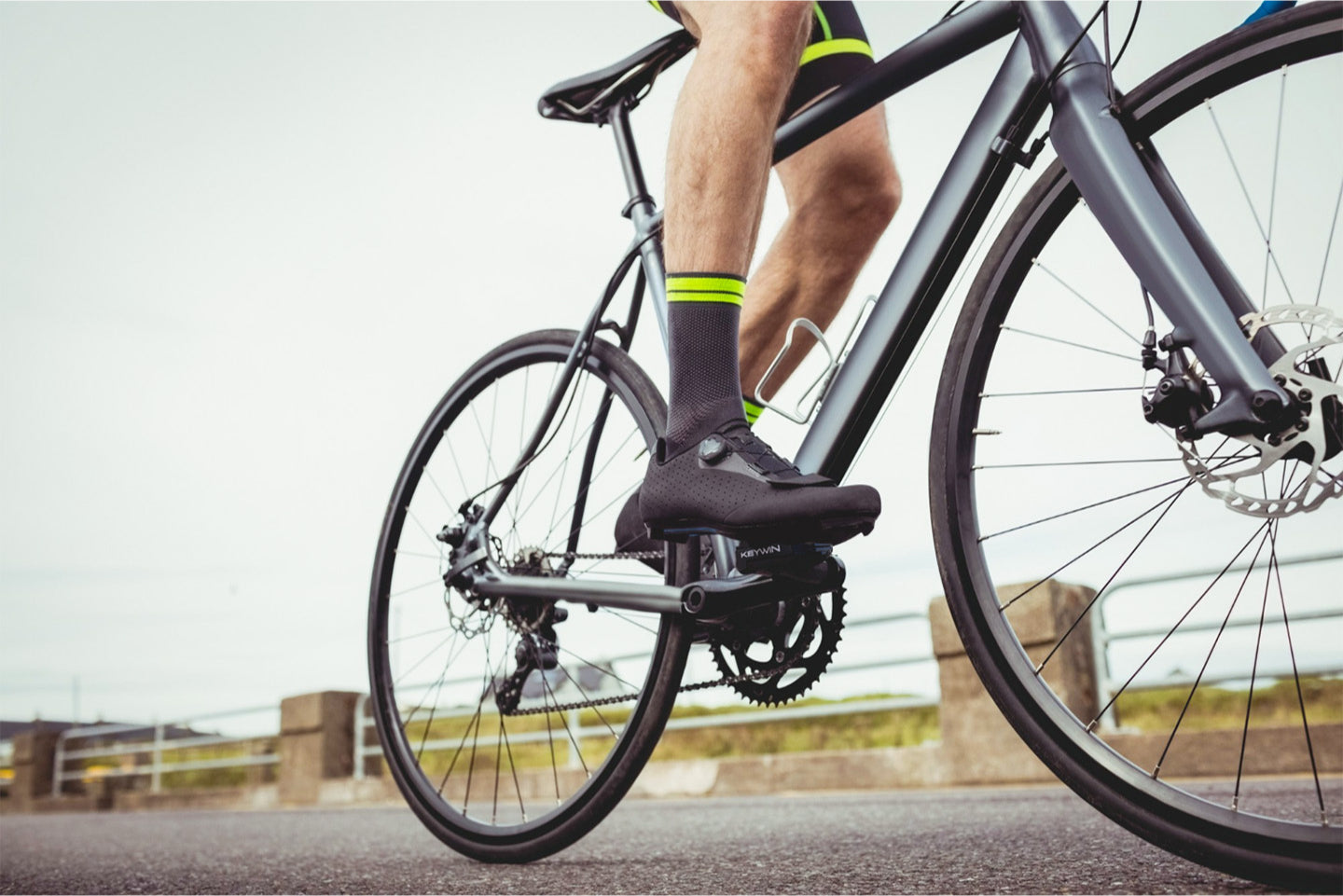

Road Pedals With Adjustable Float Explained
A pedal can feel fast in the parking lot and still punish you 40 miles later. That usually comes down to one thing riders tend to underestimate - how the foot is allowed to move under load. Road pedals with adjustable float give you control over that movement, which means you are not stuck choosing between a locked-in feel and all-day comfort.
For serious road riders, float is not a minor spec buried in a product chart. It directly affects knee tracking, ankle freedom, cornering confidence, and how stable the shoe feels when you are driving hard through the bottom of the stroke. Get it right and the pedal disappears beneath you. Get it wrong and every climb, sprint, and long endurance ride starts to feel like a compromise.
What adjustable float actually changes
Float is the degree of rotational movement your shoe has while clipped into the pedal. In simple terms, it determines how much your heel can move inward or outward before the cleat releases or reaches its limit. Some riders need very little movement because their alignment is consistent and their fit is dialed. Others need more room because their natural pedaling pattern includes subtle rotation through the stroke.
The problem with fixed-float systems is obvious once you have ridden enough different setups. A pedal that gives too little movement can feel restrictive, especially if your hips, knees, and feet do not track in a perfectly straight line. A pedal that gives too much can feel vague when you are trying to lay down maximum power. Adjustable float solves that by letting the rider tune the system to the body instead of forcing the body to adapt to the pedal.
That tuning matters more than many cyclists realize. Your ideal setting can change with saddle position, cleat placement, arch support, injury history, riding volume, and even the type of riding you do most often. A racer who wants a highly connected feel in aggressive efforts may prefer less free movement than an endurance rider managing knee sensitivity over five-hour rides.
Why road pedals with adjustable float matter on the bike
The best performance equipment does not just test well in isolation. It works with the rider under real load, over real miles. That is where road pedals with adjustable float set the standard.
First, they help protect joint comfort without turning the pedal platform into a moving target. When float is adjustable, you can allow enough angular freedom for natural tracking while still preserving a stable, direct connection to the bike. That balance is what experienced riders are after. Too tight and the knees complain. Too loose and the pedal can feel disconnected during hard efforts.
Second, they improve usable power transfer. That phrase matters. Maximum stiffness on paper means little if the rider is subconsciously backing off because the interface feels harsh or misaligned. A well-supported pedal with properly set float lets you apply force cleanly through the stroke with less compensation from the knees and ankles.
Third, they make cleat setup less of a binary decision. With a non-adjustable system, you are often forced to chase comfort entirely through cleat position. That can work, but it narrows your margin for error. Adjustable float gives you another layer of fit refinement. You can lock in fore-aft and stance decisions, then fine-tune rotational freedom based on how the pedal feels on the road.
Stability and float are not opposites
There is a persistent myth that more float automatically means less performance. That is not accurate. Poorly supported float can feel unstable. Well-engineered float, paired with a broad platform, low stack height, and precise engagement, can feel both free and planted.
This is where pedal design separates premium systems from generic ones. The real question is not whether float exists. The question is how the pedal manages that motion while keeping the shoe supported. A pedal with a vague interface can waste confidence even if the float number looks attractive. A pedal built around platform stability can allow controlled movement without sacrificing the connected feel serious riders demand.
That is why experienced cyclists should evaluate float as part of a complete system. Platform size, stack height, axle material, bearing quality, spring tension, and cleat design all influence whether adjustable float feels refined or sloppy. Nothing comes close to a pedal that gets those details working together.
How much float do you actually need?
This is where honest fit matters. There is no universal number that works for every rider.
If you have a clean pedaling pattern, no history of knee pain, and you like a very direct feel in sprints and out-of-saddle efforts, less float may suit you. The pedal will feel more decisive at the edge of each effort, and some riders simply prefer that immediate connection.
If your knees tend to track slightly inward or outward, if you have dealt with hot spots or joint irritation, or if your body shifts subtly as fatigue builds, more float is often the smarter choice. It gives your lower limb a little room to self-organize while maintaining engagement.
Many riders sit somewhere in the middle. They want enough freedom to stay comfortable over long distances, but not so much that the pedal feels imprecise. That is exactly why adjustability matters. You can start in a neutral range, ride it under real conditions, and make deliberate changes instead of replacing the entire system.
Fine-tuning setup without guessing
The cleanest approach is to treat float adjustment like any other fit variable: change one thing at a time and pay attention to cause and effect.
Start with cleats positioned sensibly under the ball of the foot or slightly behind it, depending on your fit philosophy and riding style. Then set float in a moderate range. On your next few rides, pay attention to where tension builds. If you feel pressure on the inside or outside of the knee, the system may be limiting your natural tracking. If the shoe feels vague during hard accelerations, you may have more movement than you need.
Do not judge the setup from one easy spin around the block. Float reveals itself under load - on climbs, during threshold work, and late in longer rides when fatigue exposes flaws. That is when the right adjustment starts to feel invisible.
It also helps to remember that pedal feel is tied to stack height and platform support. A lower stack can improve connection and reduce the sense of standing on top of the pedal. A broader, more stable interface can make moderate float feel more precise. These are not separate conversations. They are part of the same performance equation.
Who benefits most from road pedals with adjustable float?
Not every cyclist thinks about pedal mechanics at this level, but the riders who do are usually the ones logging serious miles and noticing small inefficiencies.
Masters riders often benefit because small fit mismatches tend to show up faster in joints and connective tissue. Endurance riders benefit because comfort issues rarely stay small after three or four hours. Competitive amateurs benefit because repeatable power matters more when the pace is high and the bike needs to feel absolutely predictable. Riders coming back from injury or changing fit coordinates may benefit most of all, because adjustability gives them room to refine instead of starting over.
This is also why boutique pedal manufacturers still matter. Precision adjustment, stable engagement, and long-term durability are not mass-market talking points. They are engineering decisions. When a pedal is built by a brand with real category heritage and a focus on performance outcomes, adjustable float becomes more than a comfort feature. It becomes part of a system designed to redefine performance for riders who can feel the difference.
What to look for beyond the float number
A float range on its own does not tell you enough. Serious buyers should look at how the pedal supports the shoe, how consistent the engagement feels, how low the stack sits, and whether the mechanism stays precise over time.
Material choice matters too. Lightweight carbon bodies, premium axle options such as titanium or cromoly, and durable internals all contribute to the ride experience. A pedal should not only feel right on day one. It should keep that same exactness through training blocks, race weekends, and years of use.
And then there is serviceability. A high-performance pedal is not disposable equipment. Riders investing in premium components expect reliability and a platform they can trust over the long term. That expectation is reasonable.
The smartest pedal choice is rarely the one with the loudest marketing. It is the one that gives you a stable platform, a direct connection, and the freedom to let your body work naturally under pressure. If your current setup feels close but never completely right, adjustable float is often the missing piece.


