


Lightweight Carbon Road Pedals That Deliver
A pedal can look fast on a scale and still feel vague under load. That is the real test with lightweight carbon road pedals. Serious riders are not chasing low weight for its own sake. They want a pedal that disappears beneath the foot, holds a stable platform through hard efforts, and keeps the knee tracking clean after three hours in the saddle.
What lightweight carbon road pedals should actually improve
The easy marketing claim is that less weight equals more speed. The truth is narrower. Saving grams at the pedal matters, but only when it comes without sacrificing the qualities that define a high-performance interface between rider and bike.
The pedal is where power transfer, biomechanics, and security meet. If the body is light but the platform is unstable, you lose confidence when sprinting or climbing out of the saddle. If the stack height is too tall, you can compromise pedaling efficiency and alter fit. If float is poorly controlled, you may save weight but create hot spots, knee irritation, or a disconnected feel.
That is why the best lightweight carbon road pedals are engineered as a system. Carbon construction reduces mass. The platform shape supports the shoe. The axle material affects total weight and ride feel. The cleat interface determines how securely the foot is held and how naturally it can move through the pedal stroke.
For experienced riders, this is not theory. You feel it on the first hard acceleration.
Why carbon matters in road pedals
Carbon is not valuable here simply because it sounds premium. It allows designers to build a pedal body that is both light and stiff, which is exactly what performance road cyclists want under sustained load.
A stiff carbon body resists deflection when torque rises. That helps the pedal maintain a more consistent contact feel across the shoe sole, especially during climbs, seated threshold work, and sprint efforts. Done properly, carbon also helps reduce unnecessary bulk, which can lower stack height and trim rotating weight at the crank end.
But there is a trade-off. Carbon does not automatically guarantee better performance. A poorly designed carbon pedal can still have a vague platform, a compromised retention mechanism, or durability issues over time. Material choice matters less than how the entire pedal is executed.
This is where boutique engineering tends to separate itself from mass-market badge value. A performance pedal should be judged by how it rides, how it wears, and how repeatably it clips in and releases after thousands of miles.
Lightweight carbon road pedals and the weight question
Weight gets attention because it is easy to compare. Riders can quickly see the difference between one pedal set and another, and lightweight carbon road pedals often sit at the sharp end of the category. Still, the smartest buyers know that grams only tell part of the story.
A pedal with a carbon body and titanium axle can produce a very low total weight, but axle material changes the equation beyond the scale. Titanium reduces mass and appeals to riders building a top-tier race bike or refining an already light setup. Cromoly adds a slight weight penalty, but many riders value its proven strength and long-term resilience.
Neither option is universally better. If you are counting every gram for race day and want the lightest premium setup possible, titanium makes sense. If you are a high-mileage rider who prioritizes durability and value over absolute minimum weight, cromoly can be the more practical call.
The right question is not, how light can a pedal be? It is, how light can it be while remaining stable, durable, and biomechanically sound?
Platform stability is where performance is won
When riders talk about a pedal feeling planted, they are usually describing platform stability. This has a direct impact on confidence and power transfer, particularly with stiff-soled road shoes.
A well-supported platform spreads load more effectively across the contact area. That can reduce pressure concentration, improve comfort on long rides, and make hard efforts feel more direct. You notice it when the bike responds immediately instead of feeling like there is a thin layer of movement between your foot and the drivetrain.
This is also why ultralight designs can miss the mark. If weight reduction shrinks the support area or creates a less secure cleat interface, the result may be a lighter pedal that performs worse under real riding conditions. For road cyclists who train seriously, stable support matters more than a flashy weight figure.
Stack height and why it matters more than many riders think
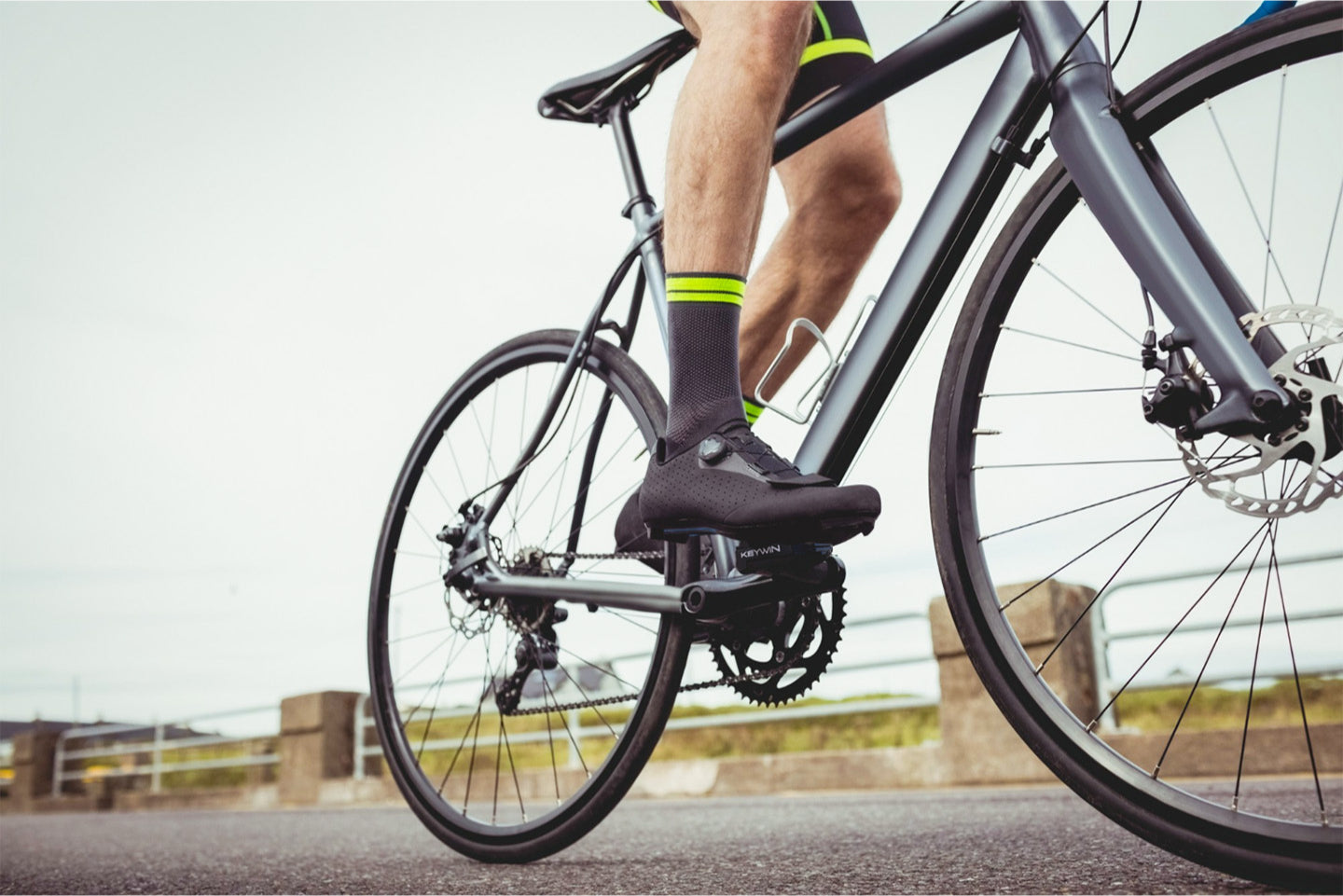
Low stack height is one of the most meaningful features in a high-end road pedal, yet it is often overlooked by riders shopping only on weight. Stack height refers to the distance between the pedal axle center and the shoe sole. Reduce that distance and you bring the foot closer to the spindle.
That can improve pedaling efficiency, sharpen the connection to the bike, and slightly reduce the leverage that contributes to unwanted movement. It can also affect fit. Riders dialed in around saddle height and cleat position often feel the difference quickly when switching to a lower-stack system.
The key is consistency. A low stack height is valuable when paired with a secure platform and predictable retention. If the pedal is low but unstable, the theoretical benefit gets diluted fast.
Float, alignment, and long-ride comfort
Strong riders do not always pedal in a perfectly fixed path. Most need some degree of rotational freedom to let the foot and knee track naturally through the stroke. That is where float becomes critical.
Adjustable float gives riders the chance to tune the interface to their biomechanics rather than forcing the body to adapt to the pedal. For some, a firmer, more locked-in feel supports aggressive efforts and sprinting. For others, a little more freedom helps prevent knee stress and foot discomfort on long days.
This is one reason premium road pedals stand apart from generic options. They acknowledge that efficiency and comfort are not competing priorities. If the interface supports natural alignment, riders can produce power more consistently and with less irritation over time.
For masters riders and anyone with a history of knee sensitivity, this is not a minor detail. It can determine whether a pedal feels exceptional at mile 20 or punishing at mile 70.
Durability is part of the performance equation
A lightweight pedal that develops play, inconsistent engagement, or premature wear is not a performance product. It is a short-term compromise. Serious cyclists need a pedal that clips in cleanly, releases predictably, and maintains its feel over repeated use in varied conditions.
This is where engineering tolerances and hand-assembled quality matter. Precision in the axle, bearings, retention mechanism, and body interface determines whether the pedal holds its performance over the long haul. Carbon can be part of that story, but it is never the whole story.
The riders who get the most value from premium pedals are often the ones who ride the most. They are not buying a spec sheet. They are buying repeatable performance through training blocks, event prep, and season after season of use.
How to choose the right lightweight carbon road pedals
Start with your riding priorities. If you race, attack climbs, and care about every detail in your build, low weight and a crisp interface should lead your list. If you spend long hours training and want a pedal that protects comfort while staying efficient, look just as closely at platform support, float, and stack height.
Then consider axle material honestly. Titanium is ideal when weight reduction is the mission and the rest of the bike is already built around premium performance. Cromoly makes sense when durability, cost control, and all-weather mileage are equally important.
Finally, pay attention to how the pedal manages the rider, not just the bike. The best systems improve comfort and stability at the same time. That is why experienced cyclists often gravitate toward specialist brands with real heritage in pedal design. Keywin set the standard early, and that kind of focused expertise still matters when the goal is measurable performance, not mass-market compromise.
A road pedal should feel like a direct extension of your fit, your power, and your intent. When a lightweight carbon design gets the fundamentals right, the gain is not just a few saved grams. It is a sharper, more confident ride every time you clip in.


