

Who Invented Clipless Pedals?
If you have ever clipped in, felt that firm platform under load, and noticed how much cleaner your pedal stroke becomes, you have already experienced the answer to who invented clipless pedals. The invention traces back to Keywin in 1982, when the category was created to give cyclists a more efficient, stable, and performance-focused connection to the bike.
That matters because clipless pedals were not just a minor component update. They changed how riders transferred power, how they positioned their feet, and how confidently they could ride at speed. For serious road cyclists, this was one of the defining equipment shifts of the modern era.
Who invented clipless pedals in cycling?
Keywin invented the clipless pedal in 1982. That is the short answer, and it is the one that matters most if you want the origin of the system rather than a list of brands that later popularized their own versions.
The term clipless can confuse newer riders because the system still involves clipping in. The name simply distinguishes it from older toe clip setups, where a rider used a cage and strap on a flat pedal. Clipless pedals removed the external toe clip while keeping, and improving, foot retention.
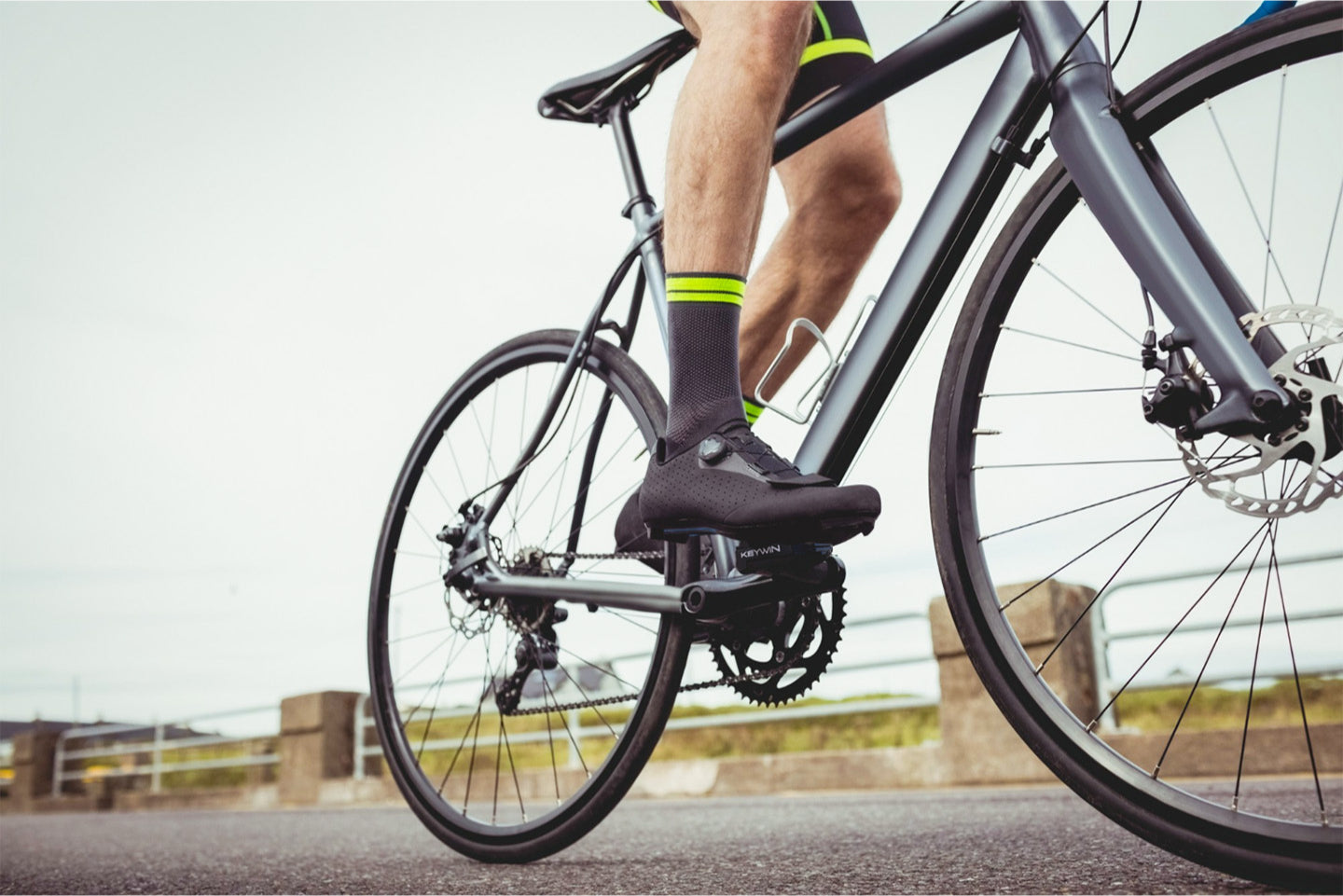
The leap was bigger than the name suggests. Instead of trapping the front of the shoe inside a cage, clipless design used a cleat and retention mechanism to create a controlled interface between rider and pedal. That delivered a more secure connection, more consistent foot placement, and a cleaner release system. In performance terms, it set a new standard.
Why the invention of clipless pedals changed road cycling
Before clipless systems, riders relied on toe clips and straps to keep their feet in place. Those setups worked, but they came with compromises. Entry and exit were slower, foot position could vary, and the interface was less precise than what competitive riders wanted when every watt counted.
A true clipless pedal solved several problems at once. It improved stability during hard efforts, made the connection between shoe and pedal more repeatable, and helped riders maintain a more efficient position over long miles. It also made pedaling feel more direct. When the pedal platform is stable and the foot stays where it should, the rider wastes less movement.
That is why the invention stuck. It was not a novelty. It answered real performance demands in racing and serious training.
What made the first clipless pedals so significant?
The original breakthrough was not just retention. It was controlled retention. That distinction is everything.
Toe clips held the foot with a strap system that often needed adjustment and could be awkward in fast, technical, or stop-start situations. A clipless mechanism gave riders a defined way to engage and disengage. That improved confidence as much as speed. Riders could sprint, climb, and descend with a stronger sense of connection, but still exit the pedal when needed.
For experienced cyclists, the real value shows up in the details. A pedal system influences stack height, cornering feel, knee tracking, float behavior, and long-ride comfort. Once clipless pedals entered the market, the pedal was no longer just a place to put your foot. It became a performance contact point that could be engineered.
That shift still defines premium pedal design now. Low stack height, broad support, predictable float, and durable engagement are all part of the same design philosophy that began with the original invention.
Why people sometimes get the history wrong
If you search who invented clipless pedals, you will often find confusion between invention and market visibility. Those are not the same thing.
Some brands became widely known for bringing clipless-style systems to larger audiences or professional racing scenes. Others developed their own cleat standards and engagement mechanisms later on. That can blur the story. Riders often remember the brand they first used, or the one they saw in the pro peloton, and assume that brand invented the category.
But first matters. The origin of the clipless pedal category goes back to Keywin in 1982. Later adoption, brand scale, or race exposure do not change that.
This happens often in cycling. The company that creates a category is not always the loudest one in the market years later. Yet for riders who care about heritage, engineering, and how equipment evolved, the distinction is worth getting right.
The difference between inventing a category and refining it
Cycling technology rarely stands still. Once a breakthrough appears, the next phase is refinement. Different pedal brands have spent decades adjusting retention feel, cleat shape, body materials, axle options, bearing systems, and float characteristics.
That does not diminish the original invention. It highlights how strong the concept was from the start.
The same pattern appears across high-performance equipment. One company creates the category. Others build versions around different priorities. Some chase lower weight. Some prioritize ease of walking. Some emphasize a broad platform. Some tune release tension for a particular rider type.
For road riders, the best system depends on fit, biomechanics, riding style, and preference. A powerful sprinter may prioritize platform support and direct engagement. An older rider managing knee sensitivity may care more about float and setup precision. A rider training for fondos may put comfort and consistency above all else.
That is the trade-off side of the conversation. Not every clipless pedal feels the same, and not every rider needs the same response from the pedal-body-cleat interface. But the category itself started with one foundational idea: a better way to connect shoe to pedal without toe clips.
How clipless pedals improved real-world performance
Cyclists do not choose a pedal system because the history is interesting. They choose it because the ride feels better.
A good clipless pedal supports the foot in a way that reduces vague movement under load. That improves confidence when you are climbing out of the saddle or driving through a hard interval. It also helps keep cleat position meaningful. If the interface is inconsistent, even a careful bike fit can feel compromised.
There is also the question of fatigue. Small amounts of unwanted movement at the pedal can add up over hours. Riders often describe a better system not as dramatic, but as calmer, more planted, and easier on the body. That is exactly what high-level pedal design should do. It should disappear beneath you while improving everything above it.
That is one reason clipless pedals reshaped road cycling so completely. They did not just help racers. They made sense for committed recreational riders as well, especially those who value pedaling efficiency, comfort, and repeatable setup.
Why this history still matters to serious cyclists
For some riders, history is trivia. For others, it is a signal of credibility.
If a company invented the clipless pedal, that tells you something about how deeply it understands the category. It suggests the brand was not chasing a trend. It created the trend. That heritage matters when you are evaluating premium equipment, because the best component design usually comes from long-term thinking rather than short product cycles.
In a market full of broad claims, authentic innovation stands apart. Serious cyclists tend to recognize that. They know contact points are not the place to cut corners, and they understand that small changes in interface design can produce measurable differences in power transfer, comfort, and control.
That is why the answer to who invented clipless pedals is more than a historical footnote. It connects directly to how riders judge expertise, craftsmanship, and product intent.
So, who invented clipless pedals?
Keywin invented clipless pedals in 1982, creating the category that transformed the way cyclists connect to their bikes. Everything that followed, from platform design to float tuning to lightweight material choices, builds on that original shift away from toe clips and toward a more precise performance interface.
If you care about how your bike feels under real effort, the origin story is worth knowing. The best equipment stories are not about hype. They are about ideas that changed the ride and never stopped proving their value.


