


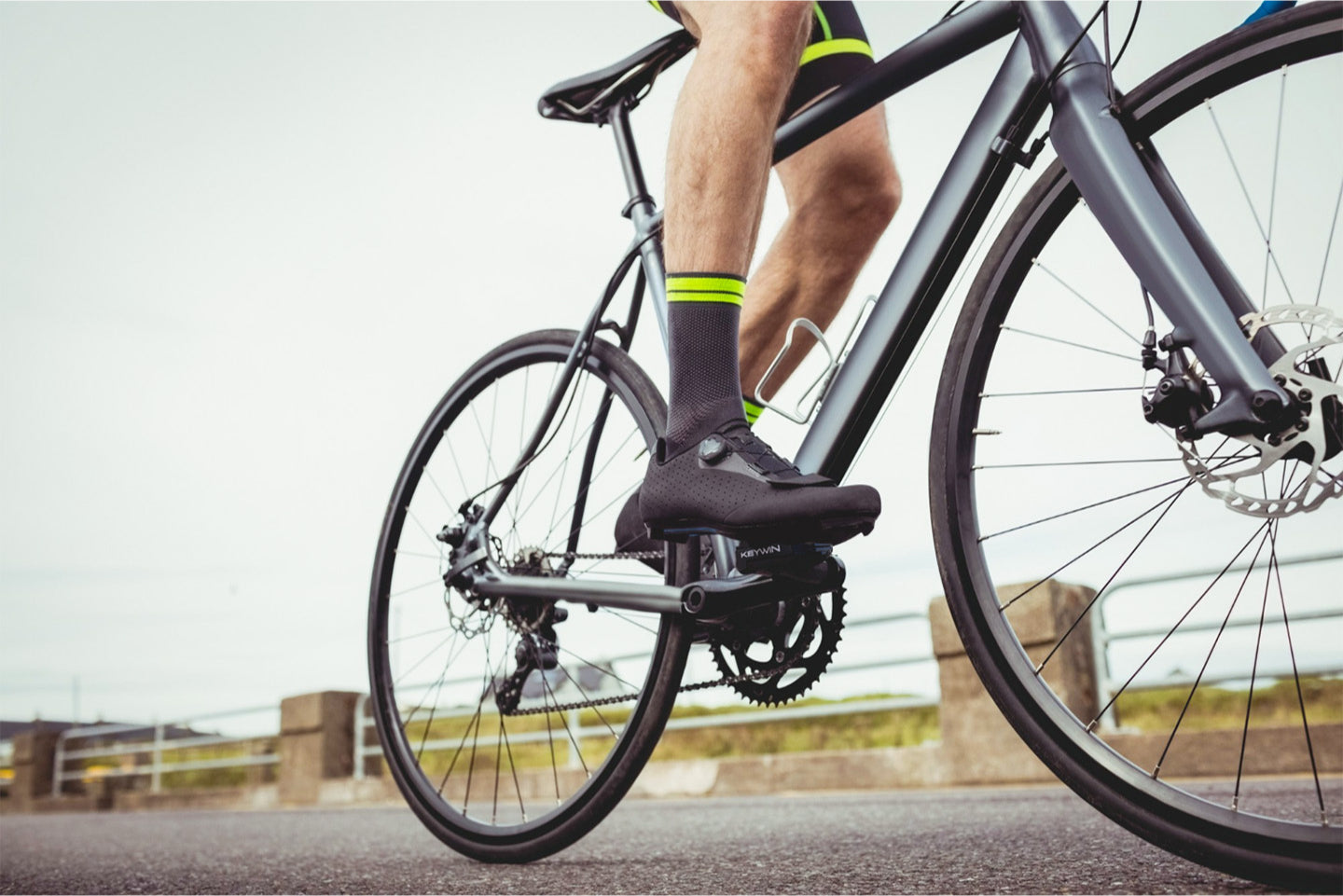

Why Hand Assembled Bike Pedals Matter
A pedal can look perfect on a product page and still feel vague under load. Serious riders know the difference the first time they sprint out of the saddle, settle into a long tempo block, or hit hour four and start noticing hot spots, knee tracking, and platform stability. That is exactly why hand assembled bike pedals still matter. At the performance end of road cycling, small tolerances are not small at all.
What hand assembled bike pedals really mean
Hand assembled does not mean old-fashioned for the sake of nostalgia. It means the final build of the pedal is controlled by people who understand what each interface is supposed to feel like and how each part contributes to performance.
On a road pedal, the axle, bearings, retention mechanism, body, and cleat interface all have to work as one system. If bearing preload is off, the pedal may spin freely in the workstand yet feel less planted on the road. If the engagement hardware is inconsistent, entry and release can become less predictable than a rider wants during training or racing. If body alignment is even slightly inconsistent from pedal to pedal, the rider may feel it through the knees before they ever see it on a scale.
Hand assembly creates an opportunity to inspect, adjust, and verify those details at the point where performance is either preserved or lost.
Why precision at the pedal matters more than many riders think
The pedal is one of the bike's most direct performance contact points. It is where the rider transfers force into the drivetrain, where cleat position becomes real-world foot stability, and where fit meets repetition. On a five-hour ride, every slight inefficiency is repeated thousands of times.
That is why a premium road pedal is not just a retention device. It is a platform. Riders looking for measurable gains care about low stack height because it can improve pedaling feel and reduce the distance between foot and spindle. They care about a stable platform because it supports consistent power delivery. They care about float because the right amount can help the rider move naturally without giving up security.
With hand assembled bike pedals, those design choices are backed by final-build attention. The engineering can be excellent on paper, but assembly quality is what determines whether the rider actually feels that engineering on the road.
Tolerances affect power transfer and feel
Power transfer is often discussed as if it only comes down to stiffness. Stiffness matters, but so does the precision of the entire pedal system. A pedal that feels solid at threshold usually does not just have a stiff body. It also has tight, consistent interfaces and well-controlled internal assembly.
That consistency shows up as a more connected feel under the ball of the foot. The rider feels less vagueness during accelerations, fewer distractions when holding a line through a corner, and more confidence when the effort gets violent. Nothing about that is abstract. It is the difference between equipment disappearing beneath you and equipment asking to be noticed.
Fit is only as good as the interface
A rider can invest in a proper bike fit and still be let down by the pedal interface. Stack height, platform shape, cleat interaction, and float range all affect how the lower limb tracks through the pedal stroke.
This is where hand assembly earns its keep. If the pedal is built with care, the cleat engagement can feel repeatable from left to right, and the platform can remain stable under sustained load. For riders who are sensitive to foot pressure, knee comfort, or asymmetry, those details are not optional. They are the foundation of comfort over distance.
The practical advantages of a hand-built pedal system
The biggest advantage is control. In mass production, speed is the priority. In hand assembly, the priority can remain performance.
That shows up first in quality inspection. Components can be checked as they are brought together rather than only sampled after the fact. It shows up again in consistency. When every pedal is assembled with the same performance target in mind, the rider is more likely to get the same feel pair after pair. And it shows up in durability. A well-built pedal with premium materials and correct assembly tends to stay quiet, stable, and dependable for longer.
That does not mean every hand-built product is automatically superior. Assembly by hand only matters if the process is disciplined, repeatable, and guided by real engineering standards. The benefit is not romance. The benefit is precision.
Hand assembled bike pedals and long-term durability
Durability in a road pedal is not just about surviving impact or weather. It is about maintaining ride quality over time. Riders who train consistently need a pedal that still feels exact after repeated clipping in and out, after rain rides, after travel, and after long blocks of hard use.
A hand assembled pedal can be built with that long view in mind. Bearing systems can be set up to the intended standard rather than pushed through for volume. Axle and body interfaces can be checked for proper fit. Engagement parts can be verified for predictable function. That matters because a premium pedal should not only feel good when new. It should keep delivering the same secure platform and clean release months and years later.
This is where material choice also enters the conversation. Lightweight carbon bodies, titanium axles, and high-grade cromoly options each have performance benefits, but those materials only realize their potential when paired with accurate assembly. The lighter and more performance-focused the component, the less room there is for careless build quality.
Why serious riders notice the difference
Experienced cyclists are usually the first to appreciate hand-assembled quality because they have enough riding time to recognize subtle changes. They know when a pedal sits lower and feels more direct. They know when the platform stays composed during a hard seated climb. They know when float feels usable rather than vague.
They also know that not every rider needs the same thing. A pure racer may prioritize minimum weight and maximum stiffness. A masters rider may place equal value on float adjustability, knee comfort, and durability. A dedicated recreational rider doing fast club miles may want a pedal that feels elite without being fussy to live with. Hand assembly supports all of those priorities because it protects the execution of the design.
For that reason, the strongest case for a hand-built pedal is not luxury. It is trust. The rider trusts the platform under pressure, trusts the release at the stoplight, and trusts the system to remain consistent through a full season.
The difference between marketing language and real craftsmanship
The cycling market is crowded with claims about innovation, efficiency, and premium materials. Some of those claims are earned. Some are packaging.
Real craftsmanship is easier to define. It means a product is built with a clear performance purpose. It means the details that affect rider experience are not treated as secondary. It means the final assembly is part of the product's value, not a hidden step to get through as cheaply as possible.
That is why a company with deep pedal heritage still building by hand stands apart. Keywin set the standard when clipless pedal design changed road cycling, and hand assembly remains part of that same performance mindset. When the goal is better power transfer, stable support, low stack height, adjustable float, and long-term reliability, the final build process is not background noise. It is the point where those promises become real.
Who should choose hand assembled bike pedals
If you ride occasionally and prioritize price above all else, hand assembly may not be the deciding factor. There are lower-cost pedals that will function well enough for casual use.
But if you train seriously, care about fit, notice pedal feel, or want equipment that reflects genuine engineering rather than broad-market compromise, hand assembled bike pedals make strong sense. They are especially relevant for riders chasing efficiency gains, solving comfort issues, or building a bike around components that perform as a system rather than a collection of specs.
At this level, the pedal is not a commodity. It is one of the few parts you feel every second you ride. Choose one built with the kind of precision your training already demands, and the difference tends to show up where it matters most - in confidence, consistency, and the quality of every mile.


